


How I Actually Cook Now — Five Components on a sunday afternoon -A Week of Meals


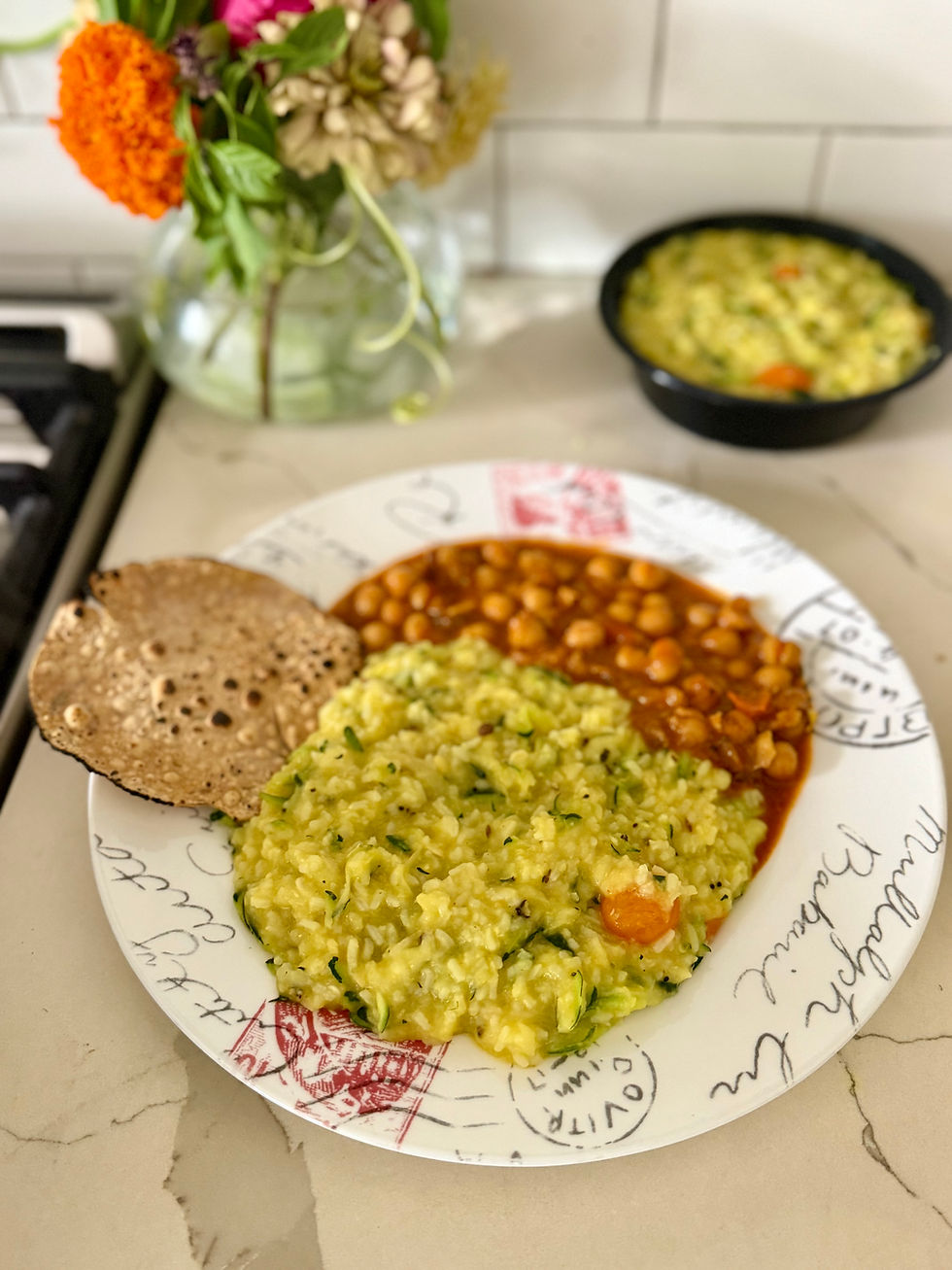
I turned the oven on four or five times today. Because I never have a plan. Looking, staring and humming is how recipes evolve in this kitchen.
I do not start with a recipe. I start with what is in the fridge, what came in from the garden this morning, and a loose sense of what I want to feel like after eating it for the next four days. This week I harvested a few zucchini, lots of Swiss chard, the last of the spring spinach, two beets (they are still getting some size) and cilantro.
A few weeks ago I started paying more attention to what I eat — more protein, more micronutrients, less fat, less white everything. I have written about why [here — link to The Body Knows Before You Do post]. But one thing I learned quickly is that eating well when you are tired, or just back from teaching two yoga classes, or in the middle of a long gardening afternoon, only happens if there is something already in the fridge worth reaching for.
So now I do a little prep. Not a full week of portioned meals in matching containers. Just components. Things I can reach for and combine in whatever direction the day calls for.
Here is what I made this Sunday. Five components. About four hours total, including all the thinking time.
1. Oat + Mung Dal
A cousin to khichdi — something simpler, more nourishing, and deeply satisfying. Reheats beautifully all week.
Per bowl: ~280 kcal · 18 g protein · 38 g carbs · 6 g fat · Makes 4–5 bowls
Ingredients
1 tbsp olive oil
1 tsp mustard seeds
1/2 tsp cumin seeds
10 curry leaves (fresh is best)
2 green chillies, slit
1 cup cabbage, finely chopped
1 cup green beans, chopped
1/2 cup carrot, diced small
1/4 cup fresh peas (from the garden if you have them)
1 cup frozen edamame
3 cups water
1/2 cup moong dal (split yellow), rinsed
1/2 cup rolled oats (not instant — steel cut works well too)
Salt and cracked black pepper to taste
Generous handful of fresh cilantro
1 lime, to serve
Method
Heat olive oil in a deep heavy pot on medium. Add mustard seeds and wait for them to splutter — do not rush this. Add cumin seeds and let them sizzle for 20 seconds.
Add curry leaves and slit green chillies. Stand back — curry leaves in hot oil will pop. Let them crisp for 30 seconds.
Add cabbage, green beans, carrot and peas. Stir well and cook for 2 minutes.
Add edamame, water, moong dal and oats. Stir everything together. Bring to a boil, then reduce to a gentle simmer.
Simmer uncovered for 15–20 minutes, stirring occasionally, until the dal is soft but not mushy. The oats will thicken everything slightly. It should hold texture — not porridge, not soup. Somewhere in between.
Season with salt and cracked pepper. Turn off heat. Add cilantro generously.
To serve: scoop into a bowl and squeeze lime over the top. The lime is not optional. It lifts everything.
To reheat during the week: add a splash of water and warm gently in a pan. Squeeze fresh lime each time — it makes it taste newly made.
If you like a creamier pot, add half a cup of coconut milk. I am trying to create recipes with less fat, so I leave it out — but it is lovely.
2. Roasted Vegetables

A big box of roasted vegetables that goes into everything all week. The mushrooms are done separately — broiled dry for a chewy texture.
Per cup: ~60 kcal · 2 g protein · 12 g carbs · 1 g fat · Makes 1 large box
Ingredients
3 large red bell peppers, sliced (use the offcuts too — nothing wasted)
2 large eggplants, peeled and sliced
2 zucchini, sliced
Generous handful of mushrooms, sliced separately
Salt to taste
No oil — dry-roasting keeps it low fat. A light spray works if you prefer.
Method
Preheat oven to 425°F (220°C). Line two baking trays with parchment.
Spread the peppers, eggplant and zucchini on one tray in a single layer. Season with salt. Do not overcrowd — vegetables steam rather than roast when crowded.
On a separate tray, spread the mushrooms. Switch the oven to broil for the mushrooms only. Broil for 12–15 minutes until they shrink, turn chewy and get a little caramelised at the edges. Broiling draws the moisture out rather than letting it pool.
Return oven to 425°F. Roast the vegetable tray for 12–13 minutes until the edges char slightly and everything is soft and sweet.
Cool completely before storing everything together in one large container. Keeps refrigerated for 5 days.
Use across the week in grain bowls, stirred into the oat-mung dal, layered in a wrap, tossed with quinoa, or eaten cold straight from the fridge.
3. Roasted Vegetable + Chickpea Dip

Not hummus exactly — smokier, more complex, with the sweetness of roasted tomato running all the way through.
Per serving (3 tbsp): ~90 kcal · 4 g protein · 10 g carbs · 3 g fat · Makes 1 jar (6–8 servings)
Ingredients
Bell pepper offcuts (the ends and irregular pieces — about 1 pepper's worth)
1 large tomato
2 green chillies
4 garlic cloves, unpeeled
1 medium eggplant
1/2 cup cooked chickpeas (canned is fine, rinsed well)
Salt to taste
Method
Place the bell pepper pieces, tomato (halved), green chillies, garlic cloves and eggplant on a tray. Roast at 425°F for 20–25 minutes until everything is fully soft and collapsing, with some char at the edges.
Let everything cool slightly. Squeeze the garlic out of the skins and discard the skins.
Transfer everything — including all the roasting juices — to a food processor. Add the chickpeas. Blend until smooth or slightly chunky. Taste for salt.
Transfer to a jar. Keeps refrigerated for 5–6 days.
The dip gets better after a day in the fridge as the flavours settle. Serve with roasted papadum, rice crackers, or raw vegetables. Or spread under roasted vegetables. Or stir a spoonful into hot dal.
4. Chana Dal + Green Beans

Cooked simply, seasoned honestly. Eat it cold as a snack, warm as a side, or scattered over a salad for protein.
Per serving: ~180 kcal · 12 g protein · 28 g carbs · 2 g fat · Makes 2–3 servings
Ingredients
1/2 cup chana dal (Bengal gram), rinsed — soak for 30 minutes
Enough water to cover by 2 inches
2 cups green beans, finely chopped
1/2 tsp salt (season the water, not after)
1/2 lime, to finish
Method
Bring the water to a boil with salt. Add chana dal and cook on a medium boil for 15 minutes. The dal should be cooked through but still hold its shape with a little bite — not chalky, not mushy.
Add the finely chopped green beans directly to the pot. Cook for a further 3 minutes until just tender.
Drain immediately. Spread on a plate to cool — this stops the residual heat from overcooking.
Once cooled, squeeze lime over the top. Transfer to a container. Keeps refrigerated for 4 days.
To bring it back to life: do a quick tempering of mustard seeds and curry leaves in 1/2 tsp oil and pour it over the top when warm.
5. Salad Base
Not a salad yet — the components waiting to become one. Left undressed so nothing goes limp.
Per serving (dressed with 1 tsp olive oil + lime): ~160 kcal · 8 g protein · 26 g carbs · 3 g fat ·
Makes 3–4 servings

Ingredients
2 cups cabbage, finely shredded
1 large English cucumber, diced (about 2 cups)
1 1/2 cups cooked chickpeas, rinsed and drained
Method
Combine all three in a glass container. Do not dress it. Do not add salt yet — salt draws moisture and everything goes limp within hours.
Store in the fridge undressed. Keeps well for 3 days.
When you want a salad: scoop into a bowl, add salt, dress with lime juice and a small drizzle of olive oil. Add whatever else is in the fridge — roasted vegetables, a spoonful of the dip, chana dal scattered on top.
My two-dressing approach: the first is acidic and spicy — lime and green chilli. The second is sweet and umami — a tiny amount of jaggery dissolved in warm water with a splash of miso. Both at the same time. They find each other in the bowl.
A note on this kind of cooking
The whole session took about four hours. That includes the thinking time, the turning the oven on multiple times, the pausing to figure out what I was actually doing.
The fridge is now full of components. The rest of the week I cook from instinct — just from a much better starting point.
I do not like eating the same things every day. What I have learned is that if I make components rather than finished dishes, I can still cook spontaneously every single day. That is the difference.
I am in the middle of a shift in how I eat and why. These recipes are part of that experiment.
PS: My husband has been given the task of boiling a dozen eggs and shelling two pounds of peas from the garden. Fresh peas straight from the pod — my absolute favourite snack.
Namaste
Savitha


Comments